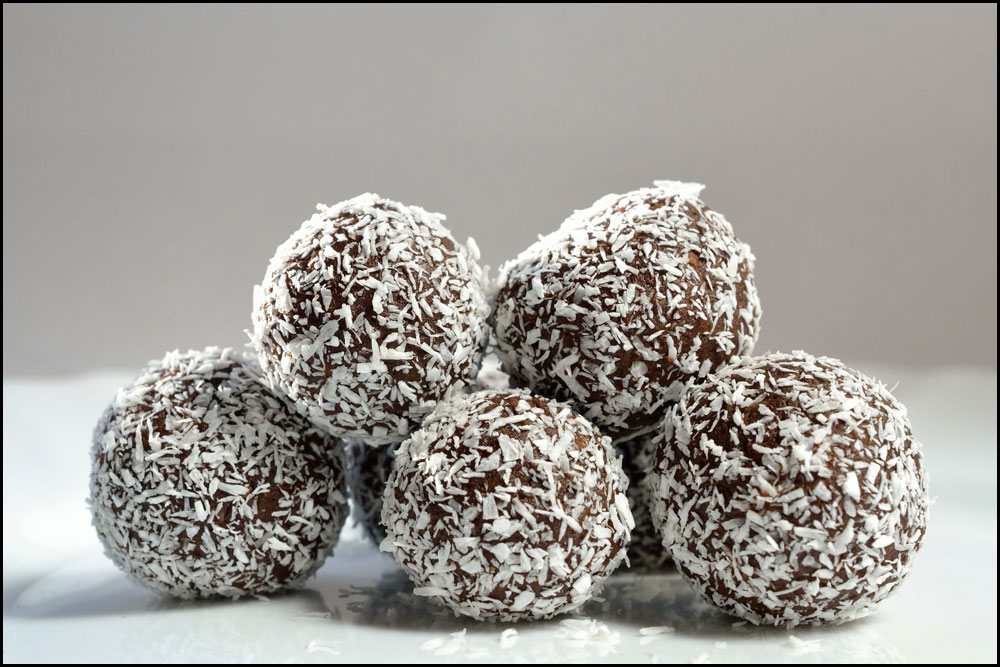
Sunday, December 20, 2020

A Rum Ball Rumble


We made rum balls on the weekend.


Well, I didn’t as much as the grandkids did and I provided technical advice here and there, but it reminded me of a former work colleague who warned me of her sister’s rum balls: “Be careful, if you have one of them you will not be able to drive afterwards!”. 


The first time she told me I took it to be a bit of Christmas myth, but it was a yearly warning and, prompted by our current activities, I decided to look into it more closely.


So, how much rum is need to take you to 0.05% blood alcohol?


According to the the Australian Government’s Health Department , a standard drink of spirits is 30mL.


From my days of doing blood alcohol testing, the general guidelines for someone with a normally frisky liver was that one standard drink raised your blood alcohol by 0.01% and your liver reduced it by 0.01% an hour.  This will vary all over the paddock with weight, age and gender but will do for this discussion.


So, not allowing for time, you need about 150mL of rum to get to 0.05% blood alcohol.


So how much is in a rum ball?


The Australian Women’sd Weekly Classic Rum Ball Recipe uses 60mL of rum for 40 rum balls, or 1.5mL per ball.  A long way short of the 150mL needed.


Of course, not all rum balls are the same size.


If the rumball was 17cm in diameter, yes it would have enough rum to take you to 0.05% blood alcohol.


But it would weigh over two kilograms and have over 32,000kJ (7700 Cal). 


Driving would be the last thing on your mind.


Sunday, January 28, 2018

A Beef with Beans


I saw the above graphic on Facebook and decided to reality check it.

By reality check, I am making no observations on the merits of a particular dietary regime, just looking at the presented data from a scientific point of view.

I am interested in whether it is accurate and whether it is fair.

My source of data is the US Department of Agriculture’s on-line database.

General: 
It is not immediately clear to the reader than the data refers to the raw product, not the as-consumed product.  I will compare raw with raw but be aware that cooking raises the meat constituents due to moisture and fat loss and lowers the bean’s constituents due to water uptake.

Protein.
Both claim 22% protein.  The only beef I could find with 22% protein was trimmed tenderloin with only ~6% fat.   All other beef cuts have less than 20% protein.  The portrayed cut of meat looks to be about 20% fat so will only have about 16-17% protein.

Red Kidney Beans have slightly more than 22% protein - most results in the 22-24% range.

So the graphic has over reported beef and under reported beans.  Not sure why but not dramatically so.

Fibre.
Spot on.  Nil in beef, about 15g in the raw beans.

Minerals : Iron, Calcium & Magnesium.
The results reported for beef are pretty much the average results expected,  the middle of the typical range.

The results reported for the red beans are all pretty much from the top end of the typical range.  A little sneaky with this.

There is a more significant problem though.  My first thought in reading this was why don’t dieticians recommend beans to people who are anaemic?  It is usually ‘red meat and/or green leafy vegetables’.  A little reading finds that the minerals, especially iron, in beans are not bioavailable.   

Only about 2% is retained by the body. 

So the value is accurate.  But misleading. 

Cholesterol.
No issues here.  But dietary cholesterol is not considered a necessarily bad thing any more.

Water
Without a doubt water is a big issue in all areas of agriculture.  As far as I can tell the 1,480 litre figure comes from housed cattle, fed on grain.  It will be high for all farming practices but this may be a top-tier estimate.  No-one seems to report the water needs of cattle in outback Queensland.

◊◊

A few things were omitted that really should be included.

Saturated Fat.
Beef has quite high saturated fat levels and this is considered the chief culprit in blood cholesterol level, not the dietary cholesterol.  Beans have none and their fibre helps lower what is already there.

Vitamin B12
Beef provides the essential vitamin, B12.  Beans do not.

Selenium.
Beef is a good source of the mineral Selenium compared to beans.  Mind you Brazil Nuts trump everything on the Selenium front.

Contaminants.
Both beef and beans are open to contamination.  Beans from pesticides, herbicides and beef from hormones and veterinary products.

Land Use.
Brazil is the third largest bean producer (after Myanmar and India) and growing.  Where is the farmland coming from?   There is also the issue of land exhaustion.  Do they rotate crops or just keep adding fertilizers?  Is the production of fertilizer included in the water budget, I wonder?

Conclusion.
There is a confirmation bias displayed in the data presented in the graphic.


Sunday, November 8, 2015

Permeate


JCN asks: What the story behind permeate in milk?

Well, it is simple enough but the marketers have had a field day with it, as if it is something evil and noxious.  Admittedly the name does conjure up images of goo oozing out of leg ulcers.

Simply put, permeate is milk with the fat and protein removed.  It consists of water, lactose, vitamins and minerals.  It is to milk what plasma is to blood.

Most commonly it is a by-product on cheese production.

It is the whey in Little Miss Muffett's curds and whey.

So why add it to milk?

Labelling laws.  Milk has a nutrition panel that gives a level of fat and protein present.  No-one consults the cows and they produce a wide range of fat and protein levels.  Dairies blend full cream milk with cream, permeate and skimmed milk to produce a standardised product that matches their label claims.

So it is natural, it is part of milk and it serves a purpose.

When Woolworths say that their milk is 'permeate free', they are lying.

Where is the ACCC when you need them?
...


Saturday, June 20, 2015

Vinegar


KM asks: my friend and I had quite a discussion on white vinegar the other day. She insisted that it's absolutely necessary to buy it from an organic store while I could not be sure if there is a whole lot of difference in taste and suitability for cooking between white vinegar bought from the normal counter and from an organic store. Is organic white vinegar superior to normal vinegar and is there a marked difference in how each tastes?

Interesting question.

Firstly , white vinegar is pretty much removed from it's feedstock ancestry.  It is made by first fermenting a sugar source of some sort, using yeast.  The resultant alcohol is distilled from the fermented liquor and then fermented with a separate bacteria (acetobacter) to convert the distilled alcohol to an acetic acid solution.  The fermented liquor is filtrered through a filter aid, such as diatomaceous earth, and heated to sterilize.  It is then diluted to the desired strength.  Vinegar is a weak solution of acetic acid.

It is not out of the question that the acetic acid is a by-product of industrial processes as well.  This could be directly or by comnmercial alcohol being fermented to produce acetic acid.  The acetic acid we use in the laboratory is far too strong to have been produced by natural fermentation.

Which ever pathway it comes through, it must meet the requirements for 'food grade'.

How 'organic' plays into this is a bit obscure.  White vinegar is pretty refined and even if the feedstock was not truly organic, it goes through a serious of steps that far removes if from its origins.

I would not expect any taste difference in organic and non-organic vinegars of the same strength.  Both are just diluted acetic acid.  The 'whiteness' points to the lack of other components of note.

Other vinegars (malt, cider, red wine, white wine, balsamic etc) carry more of their original feed matrix with them and, if organic is a goal, have more of an impact from organic practices.  Certainly the flavour is very different.

...

Wednesday, April 15, 2015

Masala Chai.


KM asks:  I am used to having (strong) tea that is made by boiling black tea, milk, sugar, and spices all together. I hear that it robs tea of all its benefits. Is that true? I have tried switching to healthier alternatives (like green tea), but nothing wakes me up in the morning better than a cup of Indian Masala Chai. Thanks a lot!

So, what are its benefits?  If waking you up in the morning is a benefit, then it clearly is doing its job.

Obviously Masala Chai has more calories than straight black tea, so over indulgence is not recommended on a straight energy basis but what components (and their effects) in the black tea are removed by adding milk, sugar and spices?

To start with, tea is perfectly good for you.  Adding milk (fat, protein, lactose) is not a minus.  Adding sugar is so-so but fine in moderation.  Adding spices is not going to be a negative.  The antioxidant advocates will say that they are a plus.  It's hard to see a downside.

Without knowing what the implied special benefits of black tea are specifically, it is not possible to know what is open to being robbed from the tea.  I suspect nothing.

In the end, food should not be regarded as a medicine.  Eat and drink in moderation.  Eat and drink for pleasure.  I do not believe that there are any super foods, nor any magic bullets.  Just because some foods contain components that are bad for you in excess (eg nutmeg) it does not mean that the contrary, that some foods are exceptionally good for you, is true.  The universe doesn't work that way.

Start your day happy, with a Masala Chai.
...

Saturday, January 10, 2015

Pass the Butter


A friend forwarded me a post on Butter and Margarine, for my comment.  My comments, in blue, are interspersed with the original item, in black.

Margarine was originally manufactured to fatten turkeys. When it killed the turkeys, the people who had put all the money into the research wanted a payback so they put their heads together to figure out what to do with this product to get their money back.

Not so, Margarine was developed as a butter substitute as a result of a competition by Napoleon III in the med-1800s.  It is not fatal to turkeys.

It was a white substance with no food appeal so they added the yellow colouring and sold it to people to use in place of butter. How do you like it? They have come out with some clever new flavourings....

Yes, it is white and unappealing.  

DO YOU KNOW.. The difference between margarine and butter?

Yes.

Read on to the end...gets very interesting!

Both have the same amount of calories.

True.

Butter is slightly higher in saturated fats at 8 grams; compared to 5 grams for margarine.

True.

Eating margarine can increase heart disease in women by 53% over eating the same amount of butter, according to a recent Harvard Medical Study.

No reference given to the study so cannot confirm or deny.  Sounds dodgy.

Eating butter increases the absorption of many other nutrients in other foods.

Yes, but so does Margarine.

Butter has many nutritional benefits where margarine has a few and only because they are added!

Broad statement with no supporting information.  Margarine has added vitamins A & D.  Butter has only natural levels but they are not necessarily as high as the fortified margarine.

Butter tastes much better than margarine and it can enhance the flavours of other foods.

Very true.  A lot of the flavour of margarine comes from added skim milk powder.

Butter has been around for centuries where margarine has been around for less than 100 years .

False.  Centuries or more for butter, 150 years or more for margarine.

And now, for Margarine..

Very High in Trans fatty acids.

This was true for old style margarines.  Modern styles have low levels of trans fats.

Triples risk of coronary heart disease ...

No evidence supplied.

Increases total cholesterol and LDL (this is the bad cholesterol) and lowers HDL cholesterol, (the good cholesterol)

No evidence supplied.

Increases the risk of cancers up to five times..

No evidence supplied.

Lowers quality of breast milk

No evidence supplied.

Decreases immune response.

No evidence supplied.

Decreases insulin response.

No evidence supplied.

And here's the most disturbing fact... HERE IS THE PART THAT IS VERY INTERESTING!

I have never trusted people who need to type in capitals.  

Margarine is but ONE MOLECULE away from being PLASTIC... and shares 27 ingredients with PAINT.

What does "one molecule away from being plastic" mean?  What is the molecule?

Margarine is as close to plastic as butter is.  Neither is particularly close.  Pretty much every chemical is only a step or two from a plastic.  That means nothing.  Protein, as a polymer of amino acids, is a plastic.  Who cares?  And the paint?  If the writer is talking old-style linseed oil based paints, well there may be some common chemicals.  But the same could be said for any product containing animal or vegetable fats.

These facts alone were enough to have me avoiding margarine for life and anything else that is hydrogenated (this means hydrogen is added, changing the molecular structure of the substance).

True

Open a tub of margarine and leave it open in your garage or shaded area. Within a couple of days you will notice a couple of things:


* no flies, not even those pesky fruit flies will go near it (that should tell you something)

But they don't come to butter either.  Why should they?  Neither contain much content to appeal to a fly.  Or to an ant. 


* it does not rot or smell differently because it has no nutritional value ; nothing will grow on it. Even those teeny weeny microorganisms will not a find a home to grow.

Both butter and margarine will go rancid.  Both will dry out.  Both have the same nutritional value.  The writer has forgotten that he said early that margarine had the same calories as butter.  Margarine will, if anything, tend to go mouldy more readily than butter.  Is mould a teeny weeny organism?  Yes.


Why? Because it is nearly plastic . Would you melt your Tupperware and spread that on your toast?

No, it's not.  It is a synthetically hardened vegetable oil that has added, colour, vitamins, milk powder, water and salt.  I have taken cream and made butter in my kitchen.  But there is no way I could make margarine.  Even though I know exactly what to do and I have a degree in plastics.  It is beyond even Heston's kitchen.

For more on the manufacture of margarine, see this earlier post.


Share This With Your Friends.....(If you want to butter them up')!

Chinese Proverb:
When someone shares something of value with you and you benefit from it, you have a moral obligation to share it with others.

Pass the BUTTER PLEASE"

You can share this post too, if you wish.

Friday, December 26, 2014

Past its 'Use-By'.


Don asks "How important are the 'sell by' dates on food? Clearly something like milk gets nasty. Bread can easily mold. But what about something like canned beans? Would that be more a textural issue; like they get soft or something? Some people in the U.S. stockpile food thinking something awful might happen. I don't agree but what would you expect of an out-of-date can of beans or even tuna?"

Researching it a bit, it seems there are lots of different date marking legislations.

In Australia, perishable food must have a USE-BY date.  Consumption beyond this date may present a health hazard.  But it presupposes that storage conditions have been complied with.  Leave your milk in the back of your car for a day and all guarantees are off.

Food that has a shelf-life of less than two years must have a BEST BEFORE date.  Consumption beyond this date may mean that the product is no longer of good marketable quality.  It may be stale or aged but does not imply a health hazard.  And it doesn't change from OK to dodgy on the BEST BEFORE date.  It is best before that date but can be passable for quite some time afterwards.  Again it depends on storage conditions.

Food expected to last beyond two years does not require a BEST BEFORE date but must have some identifiable marking to permit a recall (Batch code, manufactured date etc.).

So, where doe that get us with Don's question?

Canned beans will last a long, long time.  Canning produces a bacterially sterile product.  Enzymes are destroyed too.  Generally speaking changes happen at the time of cooking (flavour, texture) and then the product is in a kind of suspended animation.

With canned beans, assuming they were of good quality when canned, there is nothing much that can happen to them.  There is no mechanism for deterioration: free of bacteria and enzymes, protected from physical damage by a thick sauce, they are pretty indestructible.  That goes for most canned product.

The main issue will be the external deterioration of the can over time, resulting in the formation of small holes that permit the entry of bacteria or the possible failure of the lacquer or other coating on the inside of the can.  The only protection you really have from that is to buy good product.  If you are planning to cater for the end of civilization, don't do it with cheap, plain-wrap stuff.

If the people planning for disasters want to be safe they could rotate their stockpile, eating the oldest product and replacing it with fresh product, using it like a well-stocked pantry.
...


Thursday, June 5, 2014

At last, a different onion question!


Anonymous asks: "Would like to know if you can get sulphuric acid poisoning from rotting onions? Had a bag of onions in my cupboard for months and they had rotted now all I can smell is onions. Really strong at times. "

A few bits to this:

Firstly, sulphuric acid is not volatile, so you cannot smell it.   Heat it sufficiently and you will get sulphur trioxide fumes which you can definitely smell but I am talking 400degC, somewhat warmer that the average cupboard.

Secondly, it is corrosive rather than toxic.

But on to the onions.  When things rot, all manner of compounds are formed and released.  What compound and what level will be dependent on onion type and the organisms associated with the rotting.  Onions contain a lot of sulphur so the breakdown products will be smelly.  Unpleasant but not necessarily harmful.

Chuck them out and air the cupboard.  There is not much else you can do.
...


Monday, December 30, 2013

Nuts to that!


Reading an article in Food Quality New I was a bit confused about the about photo (above), said to be of pecan shells.  Well, there may be pecans there at the back but the foreground is all almond and brazil nuts.

For the record, pecans look like this:


The gist of the article, though, was about the use of dried, powdered pecan shells as a natural, organic antibiotic, specifically against Listeria sp.

I would just like to point out that natural and organic are not the sole criteria for food safety.  Strychnine, cyanide, arsenic and aflatoxins are all well encompassed by the 'natural and organic' umbrella.  OK,  arsenic's not organic.  Just testing.  Lots (I mean lots of lots) of things contain organic compounds that exhibit antibiotic properties when concentrated and deposited of some unsuspecting bacteria.

But nothing beats having the bacteria not present in the first place.

No amount of powdered hoodoo dust will trump good manufacturing practices and plant hygiene.
...

Thursday, February 16, 2012

Coffee, Tea...

.

Peter Bryenton asked "I was wondering how much caffeine there is on average in an ordinary cup of instant coffee?"

Not an easy question as the consumer is in control of how strong they make the coffee and how big a cup they use.  Generally instant coffee powder is about 2-3% caffeine and instant coffee is about 330mg/L (about 75mg per cup).  But I know my first cup of coffee in the morning is considerably stronger than my last of the day.

Tea is generally only about 80% of the caffeine levels of coffee but, again, this varies with type, cup size and steeping time.  Herbal teas generally have none but be careful of flavoured green teas, they have similar levels to black tea.

Colas are about 100mg/L; a third that of tea and coffee.

The much vaunted 'Energy Drinks' are only permitted a maximum of 320 mg/L in Australia and so are on a par with tea and coffee.  Not that they would want an image of a little old lady sipping her cuppa to be equated to the macho image of the heroic energy drink urban warrior-rapper-sportsman.
...

Sunday, February 12, 2012

Anticancer Spears

.

Kevin Bell asked: "Any info on the email going around that Asparagus is good for curing cancer? This also seems incredulous, the pharma industry are not stupid and would be onto it quickly enough if there was any credibility in it."

Well, yes, I think you nailed it yourself, Kevin.

If there was any truth in it, it wouldn't be being sold at $4 a bunch at Woolworths.

As I understand it, cancers are initiated when your body loses the plot with regard to cell regeneration and starts an uncontrolled multiplication. 

I can see no reason why a food, any food, would stop this.  I would be more inclined to believe that eating excessive amounts of asparagus would cause problems rather than the reverse.

Too much of anything is bad.

But moderate amounts of asparagus with a good home-made hollandaise sauce is not bad for you and, indeed, can improve your emotional well-being no end.

By the way, I haven't seen the email that you mention, but I am sure that the miracle chemical in asparagus will be Rutin.  Love the name.  It is a naturally occurring flavonoid found in a number of foods.  As well as in asparagus, it is also in buckwheat, citrus peel, mulberries and cranberries.  In canned asparagus it appears as white or grey flecks in the spears.  Something about the canning process triggers crystallisation.  Quite beautiful crystals under the microscope.
...

A load of old rhubarb

.

I made mention on my home blog that my rhubarb was green and that I was adding elderberries to it to make it look more 'normal'.  I have seen recipes that added strawberries to give colour.  A few people asked if green rhubarb was safe.

Yes, it is.

The green stemmed rhubarb is a fast growing, thick stemmed hybrid.  Quite safe.

The poisonous element in rhubarb is a chemical called Oxalic Acid and it is found at high levels (0.5%) in the leaves, regardless of the stem colour.

Oxalic Acid is also found in many other plants but not at the levels found in rhubarb leaves.  Excessive Oxalic Acid consumption results in kidney stones (Calcium Oxalate).  A lethal dose of rhubarb leaves is about 5kg.
...

Saturday, January 14, 2012

Potomatatoes & Acidity

Anonymous asked "Do totatoes can acidity in the body?"

Well, that is not an easy question to answer, as such.

Are we talking potatoes or tomatoes?
Are we talking cancel or cause?

Never mind - I'm guessing that it relates to the much discredited acid-alkaline diet that lingers in the fringe diet circles.   In essence, it proposes that foods are good or bad depending on the pH of a solution of the ash of the food.  The notion that the acidity or alkalinity of the ash of a food will influence the impact that the food has on your body is just plain weird.

There is no scientific data to support the theory.  There is not even a coherent theory.

Your stomach is already 100-1000 times more acidic than a tomato or a potato, so any native acidity will have a negligible impact.  No foods are natively alkaline.

As you body never reduces food to its ash, the properties of the ash are immaterial to human nutrition.

Eat a varied, balanced diet.
...

Wednesday, December 14, 2011

Cancer and spices.

.

Anonymous asked: "Do ginger, curry powder and cumin powder help reduce risk of any cancers? "

Disclaimer:  I am a food chemist and any medical comments are those of a food chemist.
 
Will anything prevent cancer?

No, probably not.  Cancer is not one disease but a diverse group of illnesses, all characterised by uncontrolled cell growth.  Cancerous cells are being produced all the time and the body deals with them.  The problems arise when the body can no longer deal with them.  This will be partly why cancers are more prevalent in the elderly; the body’s defences get weak, lazy or ineffective.

I believe that pretty much anything will cause cancer – if the body gets swamped with any chemical, systems can go awry.

But will anything prevent cancer?   I don’t believe so.  At least not any one thing.

Good diet and good health seem to be part of the cancer preventative thing :  be healthy, give your body a chance.  Let your body function as it should, defences work properly, cell reproduction work reliably.

I have little doubt that the individual components of ginger, cumin and curry powder will trigger cancers if taken in excess.  Anything taken at a level that distresses the body increases the likelihood of the body malfunctioning and cancers being the result.

But I really have no knowledge on compounds, natural or synthetic, that may directly work to prevent cancers.  And I think it unwise to pin your hopes on a 'silver bullet'.
...

Sunday, October 30, 2011

Take it with a pinch, no, a bag of salt!

.

Food Australia, who should know better, published an article earlier this year titled "Contaminated reusable grocery bags pose health risks" (63 (5) - May 2011). It was based on an article by Gerba & Sinclair entitled "Assessment of the Potential for Cross Contamination of Food Products by reusable Shopping Bags". You can download the full article here.

The article suggests bacteria, including E. coli, flourish in the green bags.

And the are probably right. The same way bacteria can flourish in pretty much any environment. Because bacteria is IN the environment. If they had done their survey by swabbing the jeans of the shoppers rather than the bags, they would have got similar results.

And as for soaking the shopping bags in meat juices and leaving them in a car boot (trunk) for two hours - well, duh!, of course bacteria levels will increase.

It was all a bit odd and I had a niggling suspicion, which is why I chased down the original article rather than relying on the summary in Food Australia. My suspicion was confirmed in the following line:

"The authors would like to acknowledge and thank the American Chemistry Council for providing funding to support this study."

So, the American Chemistry Council, a body that includes all the plastic (bag) manufacturers of America in its ranks funded the research.

Doesn't mean it's wrong but there are flashing lights all over it!
...

Monday, August 29, 2011

Not ducking the question.

.
.
.
.


Celia of Fig Jam & Lime Cordial, asks

"I've been making confit duck, and keep it for a short time in the fridge.

1. As instructed, I've been reheating the used duck fat to clarify it and then storing it in the freezer to be reused next time - is this a safe practice, and how many times can the fat be reheated and reused like this, please?

2. Secondly, confit duck (a traditional food) has been stored for generations by the French on the pantry shelf, with some instructions going so far as to say "don't worry if the bones not covered in fat go a bit green". I don't do that, I keep it in the fridge, but wondered whether it was actually safe to store meat like this unrefrigerated?

Question 1. It is a matter of taste. Over time there is a likelihood that the fat will start breaking down but that in itself is not harmful. The issue is whether the taste is affected. My Granny had a 'dripping pan' that used to hold fat that was returned time and time again to the weekend roast, with no ill-effect. Animal fats are generally too saturated to have oxidative rancidity and hydrolytic rancidity (the splitting of the fatty acids from the glycerol backbone of the fat) often cannot be tasted. A text book I read once famously said that a fat was rancid if it tasted rancid and that all other tests were, at best, just corroborating evidence.

The splitting of the triglyceride happens during digestion so it is no a health hazard as such.

So, in short: as long as the fat still tastes ok, it is fine.

Question 2. The fat layer is supposed to keep the meat protected. Despite what advertisers of disinfectants and such like would have you believe, bacteria do not spontaneously appear for no good reason. This is a habit solely retained for the start of a new Universe. If your duck is cooked, it will be sterile and the thick layer of fat will keep it sterile.

Has done so safely for many many years.

Green is more problematic but not necessarily harmful. The pigments in blood - haemoglobin and myoglobin, will oxidise and go funny colours, mostly green, grey and brown, with exposure to the air. Unsightly but not harmful. The surface of the chicken paté I make discolours quite quickly but is not harmful.

More important is to make sure that the exposed bones and such like are not handled as they do not have the layer of protective fat and will possibly give bacteria a toe-hold.
....


Sunday, August 21, 2011

Stamps. And the perils of licking them.

.
Stamp commemorating all that was left standing after the US 'liberated' Iraq?

Xink asks: Is it possible to die from licking stamps? As in the Seinfeld episode when George Costanza's fiance dies after licking cheap stamps for a wedding invitation mail out.

Good grief - we get further and further away from food chemistry!

Partly my own fault: My profile has a question on it: "What's the best time you've ever had licking stamps?" My response was "Ah, Stamps! Such a lovely girl. So many memories; how can I choose?" So I guess I have no-one to blame but myself.

The short answer is that I do not know of anyone dying from licking stamps but the mucilage that was put on stamps to act as the adhesive is a protein based material and, as allergenic reactions are generally a response to proteins, it is not impossible that someone may have a reaction.

◊◊◊

As for the Stamps of my profile. Yes, if her boyfriend found out, that could kill you.

...

Thursday, August 4, 2011

The Hormonal Cow

.
.

Celia asked: Lee, do you have any thoughts about growth hormones in Australian beef and what they're doing to us?

Well, yes, I have thoughts. Mixed thoughts.

I don't have too many facts, though, as it is a bit outside my experience.

Thoughts, in no particular order:

1. I have a general preference for no additives in food (don't you dare call them 'chemicals' unless you can name one thing on this planet (and beyond) that is not composed of chemicals) however I accept that sometimes additives to food are unavoidable.

2. The Safemeat site suggests that hormones are not harmful but that, while they increase meat yields, they decrease meat tenderness. This site is a joint venture between the meat industry and the Government.

3. Talking to another laboratory that tests HGP (Hormone Growth Promoters), they can only reliably find them in the area surrounding the injection point in the cow's ear. In other parts of the body they are too low to quantify.

4. Like it or not, we must increase our food production to meet the population growth; farmland is decreasing, so per-acre yields must increase. But we eat too much meat per meal, as a rule.

5. There is little evidence available to show that the nature-identical hormones are harmful. I am probably more comfortable with them than I am with the fully synthetic ones.

6. I would favour mandatory labelling.

So, in summary, I don't think they are harmful but would prefer they not be used.

But I am no expert.
...

Wednesday, July 20, 2011

Steak Tartare

.

Celia, of Fig Jam & Lime Cordial, asked "Does the traditional food rule apply to dishes like steak tartare?"

Yes, is the short answer.

Steak Tartare is a traditional food.

Despite the rantings of Professor A. C. Grayling, philosopher and vegetarian irrationalist, meat is not full of bacteria. (See here) Once you cut it, though, bacteria is introduced and the life of the meat starts being reduced.

A number of things need to be remembered:

  1. The amount of bacteria that you introduce in chopping the meat is quite small. Especially if you take care to use clean knife.
  2. Bacteria, at room temperature, will double in numbers every 20min, so what starts out as a low level can rise very quickly.
  3. Most spoilage bacteria is just that, spoilage bacteria. Pathogens, such as E-coli or Salmonella, are less prevalent and less likely to be introduced in the chopping of the meat.
  4. The concept of an 'infectious dose'. Everyday we are ingesting low levels of bacteria, including pathogens, with no ill effect. There is a certain level that is necessary to induce illness.

The long and short of it is that Steak Tartare must be made fresh and eaten fresh.

That is the traditional way to do it.

And it is quite safe.
...

Sunday, July 17, 2011

Sunscreens, SPF 50

.

Much excitement in Australia this week with the granting of permission to sell SPF 50 sunscreens.

Got to be 66% better than all those SPF 30 ones, mustn't they?

Well, hold you horses. Could it just be marketing hype?

To get the SPF factor, you divide 100 by 100 minus the percent of the UV radiation blocked.

So if a sunscreen blocks 90% of the UV light, its SPF is 100/(100-90) = SPF 10.

95% = SPF 20

97% = SPF 30+

98% = SPF 50.

So paying the extra money for an SPF 50 sunscreen will increase your protection by just 1%.

If (IF!) it is re-applied regularly and applied at the same thickness as is used in the test (0.1mm).

T-shirts and a hat have a higher SPF factor.
...